
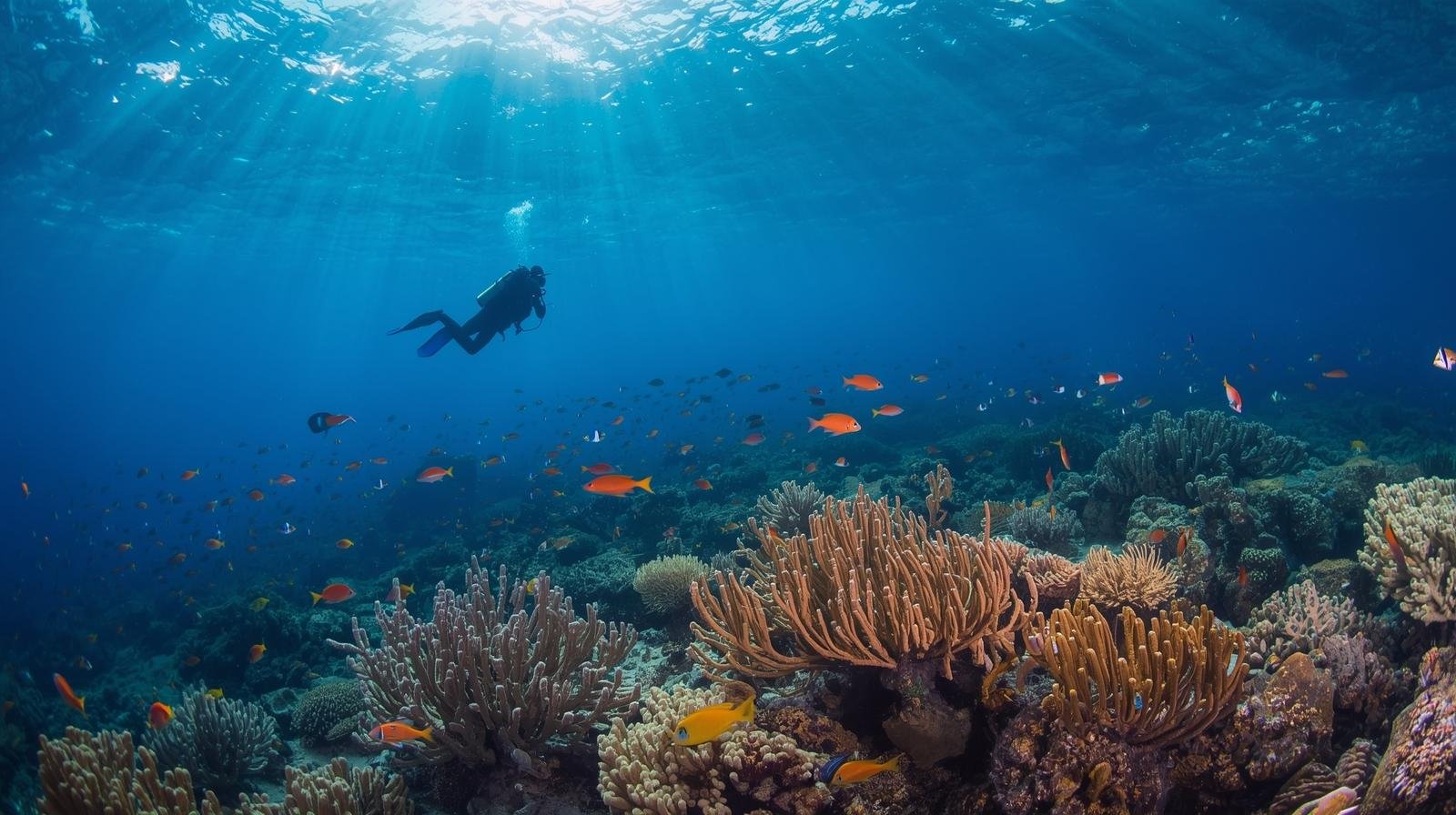
The waters around Mauritius are ridiculously clear. Visibility often stretches past 40 meters on a good day. This volcanic island is a scuba diving destination that draws divers from everywhere.
It’s won the World Travel Awards for Leading Dive Destination five times now. The underwater scenery includes shipwrecks covered in coral and caves carved by ancient lava.
Grey reef sharks cruise by, while pink corals drape over sunken boats. The formations here are different from what most divers see elsewhere. What makes this island so special that people keep coming back?
Understanding Mauritius’ Underwater Geography
The underwater landscape exists because of old volcanic eruptions. Lava created tunnels, arches, caves, and what locals call cathedrals under the water. Marine life loves these protected spots near the reef barriers.
Water stays warm all year, going from 21 °C to 30 °C depending on the season. Mauritius sits about 1,000 kilometers east of Madagascar, pretty far from most places. The best diving happens outside the calm lagoons, where things get deeper.
The northwest and southwest coasts have the most dive sites within easy reach. Getting to remote spots becomes easier with Mauritius Catamaran Sailing Cruises from different beaches.
Prime Diving Zones Around the Island
North coast diving beats most other areas hands down. Coin de Mire island has around 11 dive sites, just eight kilometers away. The Djabeda wreck sits at 30 meters, totally blanketed in pink coral.
Grand Baie and Trou aux Biches work great as launch points for trips. Photographers love these spots for tiny creatures like moray eels and mantis shrimp. The Cathedral near Flic en Flac made it onto the world’s top 50 list.
Sunlight streams through natural arches like some kind of underwater chapel. Southwest areas around Le Moyne are just as good, though. St. Jacques is famous for drift diving, where currents do the work. Land lovers might enjoy Hiking and Trekking in Mauritius for the views up top.
Marine Life Encounters Worth the Journey
Mauritius works really well for photographers chasing small subjects. Hidden creatures blend perfectly with rocks and plants around them. Leaf fish look like floating leaves, while ghost pipefish play hide and seek.
Spotting several moray eel types in one dive happens pretty often here. Shark Arena near Snake Island lives up to its name, with dozens circling. Stingrays float by gracefully, and eagle rays show up in deeper sections.
Humpback whales pass through between August and November if timing works out. The coral variety matches up with anywhere good in the Indian Ocean. Colors range from soft pinks to purples, blues, and greens everywhere.
Some angelfish and butterflyfish only live in these waters and nowhere else. Whale and dolphin fans should check out Mauritius Dolphins Whales tours.
Wreck Diving Adventures
Twenty shipwrecks sit on the ocean floor around the island. The Stella Maru is a Japanese fishing boat sunk on purpose in 1987. It rests at 26 meters and pulls in barracudas, batfish, and sometimes frogfish.
The Silver Star is bigger at 57 meters long on a deep reef ledge. They scuttled it back in 1992 and now the rays hang around it constantly. Experienced divers can go inside, while others swim around the outside parts.
The Sirius wreck goes way back to an 1810 battle between navies. Old cannons and cannonballs are scattered all over the seafloor down there. Some pieces of the wreck stick up in shallow water for snorkelers too.
Planning the Perfect Diving Trip
Timing matters when booking a trip here. October to December and March to April usually bring the clearest water. But honestly, Mauritius works as a scuba diving destination any time of year.
About 40 dive centers have proper accreditation from the local association. Most operate right from hotels along the coast, which makes things convenient. Packages usually throw in gear rental, guides, and lessons for newcomers.
Blue Bay Marine Park has easy shallow spots for first timers. Places with strong currents need more experience to handle safely. Budget travelers can look into Budget and Cheap Hotels in Mauritius close to dive areas.
Essential Gear and Certification Requirements
A 3 mm wetsuit does the job for most dives throughout the year. Warmer months let divers stay down longer without getting cold. PADI or CMAS cards work fine at every dive center.
Learning to dive on the island is totally doable through certified instructors. Several places offer online theory classes before the trip even starts. Going inside wrecks needs special wreck diving certification first.
Anything deeper than 18 meters requires at least an Advanced Open Water level. Night dives are completely different, with creatures coming out after dark. Lionfish, lobsters, and eels become way more active once the sun goes down.
Conservation and Responsible Diving
The local diving association really cares about keeping reefs healthy. Every certified center follows rules that protect underwater ecosystems from damage. Touching corals, feeding fish, or taking souvenirs breaks those rules.
Good buoyancy stops fins from accidentally smashing into coral heads. Sticking to marked paths keeps foot traffic off sensitive areas. Choosing responsible operators helps protect these spots for decades ahead.
Several wrecks got sunk deliberately to give marine life new homes. Smaller groups and detailed briefings mean better dives without crowding sites.
Beyond Diving: Complementary Island Experiences
The island has plenty to do when not underwater. Mountains in the middle offer hiking trails with amazing views of the coast. Looking down from up there shows how volcanoes shaped the diving spots below.
Food here mixes French, Indian, Chinese, and Creole styles into something unique. Markets sell fresh fish, tropical fruit, and stuff made by local craftspeople. Beaches work great for relaxing between dives and planning the next one. Catamaran trips to nearby islands throw in snorkeling at quiet bays.
Ready to see what the hype is about? Head over to Mauritius Holidays and start planning a trip.
Frequently Asked Questions
1. What is the best time to visit Mauritius for scuba diving?
October to December and March to April bring the best conditions. Water stays clear and weather cooperates during those stretches.
2. Do I need certification to dive in Mauritius?
Yeah, a PADI or CMAS card is needed for most dives. Beginners can learn through local centers that teach courses there.
3. How much does diving cost in Mauritius?
Single dives run about 40 to 60 euros each. Multiple dive packages usually cost less per dive than singles.
4. What marine life can I expect to see?
Grey reef sharks, rays, eels, and turtles are common sights. Over 200 species live on these reefs, including some rare ones.
5. Is Mauritius suitable for beginner divers?
Definitely, lots of shallow protected spots work for beginners. Blue Bay Marine Park has calm conditions and tons of fish.
6. What water temperature should I expect?
Ranges from 21 °C in colder months to 30 °C when warm. A thin 3 mm wetsuit handles most conditions just fine.
7. Are there shark encounters while diving?
Grey reef sharks appear regularly at places like Shark Arena. They’re generally chill and not aggressive toward divers, though.
8. Can I dive the shipwrecks as a beginner?
Some wrecks like Stella Maru need intermediate skills at 26 meters. Tougher ones requiring going inside need advanced certification and experience.

0 Comment